


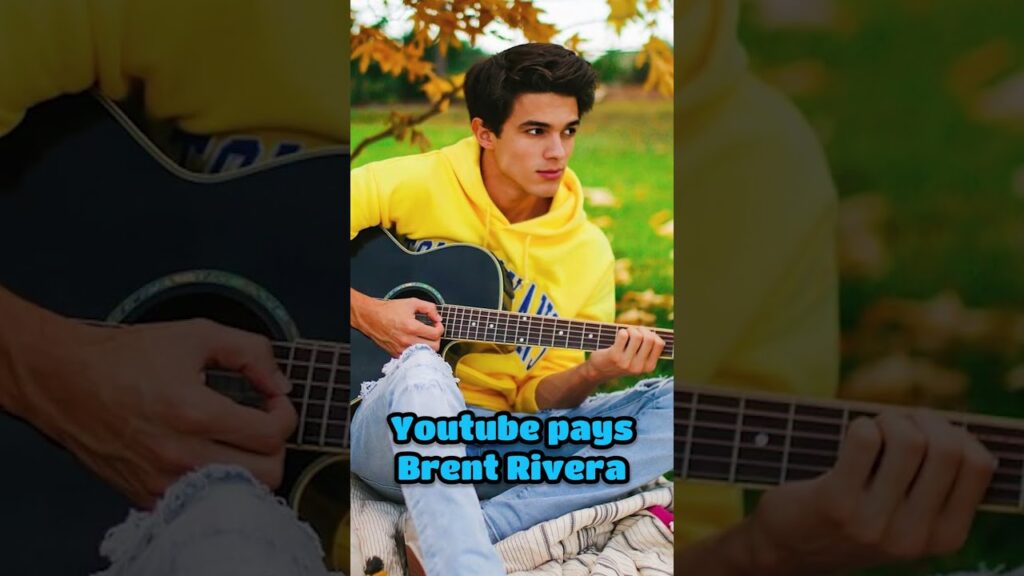
Introduction: The Financial Analysis of Brent Rivera — Income Diversification in the Digital Age
This article presents a detailed economic examination of Brent Riveras income profile and the broader theme of income diversification among digital content creators. Using publicly observable metrics (follower counts, engagement rates, platform monetization models) and standard industry assumptions, this piece constructs an estimated financial model, highlights key revenue streams, and analyzes the risks and strategic trade-offs of a creator-first business model. Variations of the topic, such as Financial Analysis of Brent Rivera: Diversified Income Strategies for Influencers and Brent Riveras Financial Profile in the Age of Multi-Platform Monetization, are referenced to broaden the semantic coverage of the discussion.
Background and Profile: Who Is Brent Rivera?
Brent Rivera is a multi-platform social media personality known for content on YouTube, TikTok, and Instagram. As an influencer and actor, his business model encompasses content creation, brand collaborations, merchandise, and occasional media appearances. This profile provides the basis for a financial analysis centered on diversification, volatility management, and growth potential in the digital economy.
Public Metrics and Industry Benchmarks
- Followers and reach: Multi-million follower counts across YouTube, TikTok, and Instagram (used as inputs for revenue estimates).
- Engagement: Variable by platform; typically higher on video platforms for creators in the same category.
- Monetization channels: Ad revenue, sponsored content, merchandise, licensing, and equity stakes in startups or production companies.
Revenue Streams and Income Diversification
A comprehensive creator income model emphasizes several distinct sources. For Brent Rivera, we categorize these into primary buckets and then assign estimated weights based on observed industry patterns for creators in the same tier.
Primary Revenue Categories
- YouTube AdSense: CPM/CPV-based earnings from long-form videos.
- Sponsored Content: Brand deals across platforms with one-off or series-based payments.
- Short-form Platform Monetization: Creator funds, tips, and short video platforms (TikTok Creator Fund, Instagram Reels bonuses).
- Merchandise & E-commerce: Direct-to-fan product sales and limited drops.
- Content Licensing & Appearances: Licensing clips, TV/film work, and guest appearances.
- Equity/Investments: Stakes in startups, web3 projects, or production companies (less liquid, higher variance).
Relative Importance & Typical Weights
Using industry benchmarks for creators with large followings, a plausible portfolio weight might be:
- YouTube AdSense: 25–35% of total digital income
- Sponsored Content: 30–40%
- Short-form Monetization & Tips: 5–10%
- Merchandise: 10–20%
- Licensing / Appearances: 5–10%
- Equity & Investments: 0–10% (variable)
Estimated Financial Model: Revenues, Costs, and Profitability
Below is a modeled financial snapshot using conservative-to-moderate assumptions. These estimates are illustrative and should be treated as scenario analysis rather than precise accounting.
| Revenue Source | Assumed Annual Revenue (USD) | Assumed Margin | Estimated Annual Gross Profit (USD) |
|---|---|---|---|
| YouTube AdSense | $900,000 | 85% | $765,000 |
| Sponsored Content | $1,200,000 | 90% | $1,080,000 |
| Short-form Platform Monetization | $200,000 | 90% | $180,000 |
| Merchandise & E-commerce | $450,000 | 40% | $180,000 |
| Licensing & Appearances | $150,000 | 70% | $105,000 |
| Equity & Investments (realized) | $100,000 | 95% | $95,000 |
| Total | $3,000,000 | – | $2,405,000 |
These figures produce an estimated annual gross profit of roughly $2.4 million on a modeled revenue of $3.0 million. Important caveats include overhead (management fees, production costs, legal/accounting), taxes, and reinvestment. After overhead and tax, the net income could be substantially lower—potentially in the $1.0–1.6 million range depending on spending and effective tax rates.
How These Estimates Were Constructed
- Ad rates and CPMs: Used conservative CPMs for long-form YouTube ($2–$6 effective CPM after YouTube cut) scaled to estimated monthly views.
- Sponsorship pricing: Estimated based on follower count, engagement rates, and market rates ($20k–$200k per high-profile deal depending on scope).
- Merch margins: Typical DTC merchandise net margin is 30–50% gross, but marketing and returns can push net below 40%.
- Short-form revenue: Aggregated platform creator funds, tipping, and short ad revenue.
Cost Structure and Profitability Dynamics
Understanding costs is essential for assessing sustainability. Key cost categories include fixed production costs, variable marketing/fulfillment costs, talent/management fees, and capital investments for media projects.
Major Cost Categories
- Production & Creative: Studio time, crew, equipment amortization—can be 5–20% of revenues depending on production quality.
- Talent & Management: Management, agents, and collaborators often receive 10–20% commissions on certain revenue types.
- Merch Cost of Goods Sold (COGS): Manufacturing, warehousing, shipping, returns.
- Administrative & Legal: Accounting, legal, insurance—fixed but essential for scaling.
- Taxes: High marginal tax rates for high-income individuals; effective tax planning can materially affect after-tax cash flow.
Risk Factors and Sensitivity Analysis
The business model of a creator like Brent Rivera is exposed to platform risks, reputation risk, demand fluctuations, and macroeconomic conditions. A simple sensitivity table below illustrates how a 20% swing in major revenue streams impacts total revenue.
| Scenario | Total Revenue (Base) | Change in Sponsored Revenue | Change in YouTube Revenue | Adjusted Total Revenue | Approx. % Change |
|---|---|---|---|---|---|
| Base | $3,000,000 | 0% | 0% | $3,000,000 | 0% |
| Downside | $3,000,000 | -20% (-$240,000) | -20% (-$180,000) | $2,580,000 | -14.0% |
| Upside | $3,000,000 | +20% (+$240,000) | +20% (+$180,000) | $3,420,000 | +14.0% |
This sensitivity illustrates that sponsored content and YouTube ad revenues are materially influential. For creators heavily dependent on a few large brand deals or a single platform, volatility can be greater than the above example suggests.
Investment Strategy and Asset Allocation
Many high-earning creators move from earned income toward invested assets for stabilization and long-term wealth building. Common allocations include:
- Liquid savings and low-risk bonds: For cash flow smoothing and tax obligations.
- Equities and index funds: For long-term growth diversification outside creator-specific risk.
- Direct investments in entertainment/media startups: Strategic bets that leverage the creators brand.
- Real estate: Often used as both lifestyle and investment diversification.
Example Asset Allocation for a Creator Portfolio
Hypothetical allocation for risk-managed growth:
- 40% equities (public markets)
- 20% fixed income / cash
- 20% real estate
- 10% private equity / venture investments
- 10% alternative (collectibles, crypto, IP)
Taxation, Compliance, and Regulatory Considerations
Creators face complex tax situations: self-employment taxes, state income taxes, VAT/sales taxes for merchandise, and international withholding for cross-border revenue. Effective tax planning can materially change net take-home pay.
Key Tax Points
- Self-employment taxes: Social security and Medicare contributions on earned income.
- Sales tax / VAT: Physical and digital goods sales can trigger multi-jurisdictional tax obligations.
- Corporate structures: Many creators form entities (LLCs, S-Corps) to manage liability and tax efficiency.
- Transfer pricing & international income: If revenue is earned internationally, withholding and foreign tax credits become relevant.
Macro Trends and Industry Dynamics Affecting Creator Economics
The creator economy operates at the intersection of platform policy, advertiser demand, and consumer attention. Important macro trends include:
- Platform algorithm changes: Can shift reach and monetization quickly.
- Advertiser budgets: Sensitive to recessions and brand safety concerns.
- Rise of short-form video: Drives growth but often monetizes lower per view than long-form.
- Brand-resilience: Diversified creators are generally more resilient to platform-specific shocks.
Appendix: Methodology, Assumptions, and Sensitivity Parameters
The financial model uses a combination of industry CPMs, typical sponsorship rate ranges, merchandise margin assumptions, and conservative realized returns from small equity stakes. Important assumptions include:
- YouTube Effective CPM: $2–$6 (net to creator after platform cut).
- Sponsorship averages: $20k–$200k per campaign depending on format.
- Merchandise annualized revenue: 10–15% of overall revenue for creators with dedicated e-commerce channels.
- Tax & Overhead: Post-tax net calculations assume a 30–45% combined effective tax and overhead burden depending on jurisdiction and spending.
The analysis emphasizes scenario planning and the importance of diversification: media diversification (multiple platforms), product diversification (merch, licensing), and financial diversification (investments in traditional assets). For a creator like Brent Rivera, the combination of strong audience reach and strategic diversification can sustain high income levels but does not eliminate volatility or regulatory exposures.
Future research could refine these models with granular viewership data, contract-level sponsorship terms, and audited financial statements. Until such data is publicly available, the approach here is a probabilistic, benchmark-driven assessment intended to illuminate the financial mechanics of influencer-driven enterprises within the modern digital economy.